BY : FAITH NKWOUKWA , AKACHI NWAOGWUGWU & OKECHUKWU D OKECHUKWU.
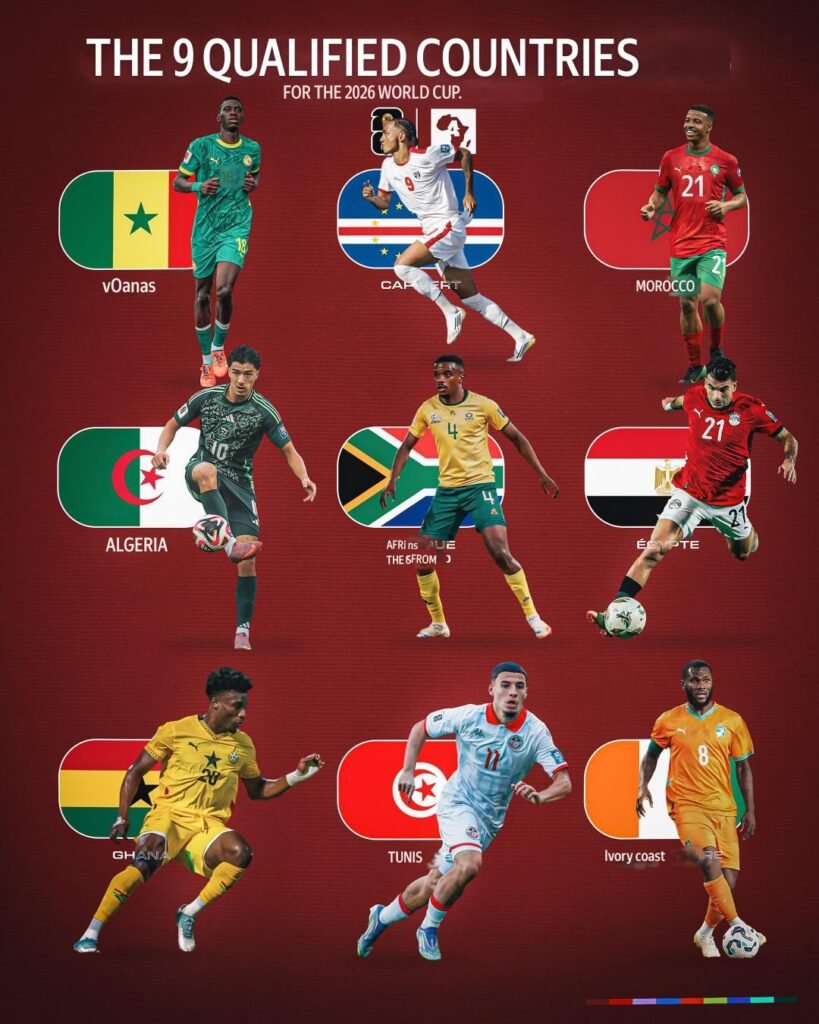
As the countdown to the FIFA World Cup 2026 intensifies, Africa has celebrated a major milestone: nine nations have secured automatic qualification for the tournament, which will be hosted jointly by Canada, Mexico, and the United States. This marks a historic moment for the continent, as the World Cup expands to 48 teams, giving Africa more opportunities to showcase its footballing talent on the world stage.
The Confederation of African Football (CAF) allocated nine direct slots for African teams, up from the previous five, reflecting the continent’s growing influence in world football. The qualifying rounds were fiercely competitive, with teams battling over several months to claim top spots in their respective groups. Each group winner earned a guaranteed place in the tournament, avoiding the uncertainty of intercontinental playoffs.
Morocco, continuing its strong World Cup tradition, topped Group E to secure automatic qualification. Known for its disciplined defense and creative midfield, Morocco is expected to be a formidable contender. Similarly, Tunisia emerged as Group H winners, displaying a resilient squad with tactical discipline that has been honed over years of continental competition.
Egypt, a team with a rich footballing history and three Africa Cup of Nations titles in the last decade, dominated Group A, earning its place in North America. Algeria, champions of Africa in 2019, qualified from Group G, combining experienced players with rising stars to secure their spot. West African giants Ghana topped Group I, adding to their impressive World Cup pedigree, having produced legendary performances in previous tournaments.
In a breakthrough moment, Cape Verde qualified from Group D, making its first-ever appearance at a FIFA World Cup. Their remarkable achievement reflects the growing competitiveness of smaller African nations and the increasing investment in football development across the continent. South Africa, Africa’s 2010 World Cup host, secured Group C with a well-balanced squad of seasoned professionals and youthful talent, demonstrating consistency in both defense and attack.
Ivory Coast, another powerhouse of West African football, earned Group F’s top spot, combining speed, tactical awareness, and goal-scoring prowess. Finally, Senegal, Africa’s 2022 World Cup representatives, qualified from Group B, boasting a team filled with dynamic attackers and experienced defenders capable of competing with the world’s best.
These nine teams represent a diverse mix of North, West, and Southern African footballing traditions, showcasing the depth and talent present across the continent. With the expansion of the World Cup format to 48 teams, Africa now has an unprecedented platform to demonstrate its growing footballing influence.
Beyond the on-field excitement, African qualification is expected to generate substantial attention and support from fans across the continent. Local governments, football associations, and corporate sponsors are preparing to back their teams, recognizing the tournament’s power to unite nations and inspire the next generation of players.
As the tournament approaches, the focus will shift from continental qualifying battles to global competition. African teams will aim to not only participate but challenge for glory on the world stage, seeking to build on previous successes and cement Africa’s reputation as a hotbed of football talent.
The FIFA World Cup 2026 promises to be a historic and thrilling showcase for African football, with nine nations ready to leave their mark on the biggest sporting stage in the world.